Build a User Management App with Vue 3
Explore drop-in UI components for your Supabase app.
UI components built on shadcn/ui that connect to Supabase via a single command.
This tutorial demonstrates how to build a basic user management app. The app authenticates and identifies the user, stores their profile information in the database, and allows the user to log in, update their profile details, and upload a profile photo. The app uses:
- Supabase Database - a Postgres database for storing your user data and Row Level Security so data is protected and users can only access their own information.
- Supabase Auth - allow users to sign up and log in.
- Supabase Storage - allow users to upload a profile photo.
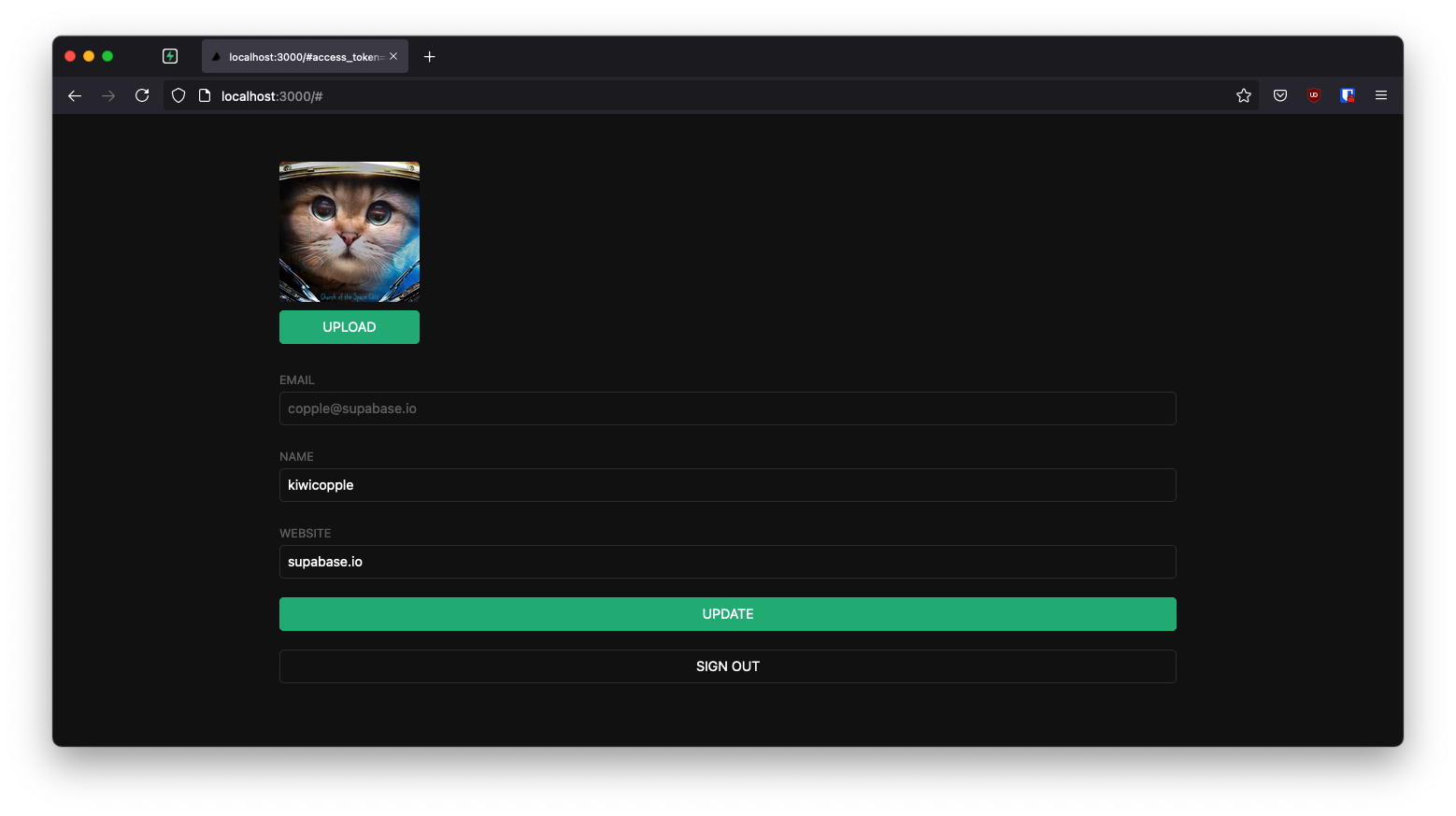
If you get stuck while working through this guide, you can find the full example on GitHub.
Project setup#
Before you start building you need to set up the Database and API. You can do this by starting a new Project in Supabase and then creating a "schema" inside the database.
Create a project#
- Create a new project in the Supabase Dashboard.
- Enter your project details.
- Wait for the new database to launch.
Set up the database schema#
Now set up the database schema. You can use the "User Management Starter" quickstart in the SQL Editor, or you can copy/paste the SQL from below and run it.
- Go to the SQL Editor page in the Dashboard.
- Click User Management Starter under the Reference > Examples tab.
- Click Run.
You can pull the database schema down to your local project by running the db pull command. Read the local development docs for detailed instructions.
supabase link --project-ref <project-id># You can get <project-id> from your project's dashboard URL: https://supabase.com/dashboard/project/<project-id>supabase db pullGet API details#
To interact with data in database tables, you use the client libraries that wrap the auto-generated Data API endpoints, authenticating using the Project URL and key from the project Connect dialog.
See API keys for a full explanation of all key types, their uses, and where to find them.
Building the app#
Start building the Vue 3 app from scratch.
Initialize a Vue 3 app#
This guide uses Vite with Vue 3 Template to initialize
an app called supabase-vue-3:
# npm 6.xnpm create vite@latest supabase-vue-3 --template vue# npm 7+, extra double-dash is needed:npm create vite@latest supabase-vue-3 -- --template vuecd supabase-vue-3Then install the only additional dependency: supabase-js
npm install @supabase/supabase-jsAnd finally save the environment variables in a .env file, you need the API URL and the key that you copied earlier.
VITE_SUPABASE_URL=YOUR_SUPABASE_URLVITE_SUPABASE_PUBLISHABLE_KEY=YOUR_SUPABASE_PUBLISHABLE_KEYWith the API credentials in place, create an src/supabase.js helper file to initialize the Supabase client. These variables are exposed
on the browser, and that's fine since you have Row Level Security enabled on the Database.
import { createClient } from '@supabase/supabase-js'const supabaseUrl = import.meta.env.VITE_SUPABASE_URLconst supabasePublishableKey = import.meta.env.VITE_SUPABASE_PUBLISHABLE_KEYexport const supabase = createClient(supabaseUrl, supabasePublishableKey)App styling (optional)#
An optional step is to update the CSS file src/style.css to make the app look better.
You can find the full contents of this file in the example repository.
Set up a sign-in component#
Set up an src/components/Auth.vue component to manage to add Magic Links as an option, so users can sign in with their email without using passwords.
<script setup>import { ref } from 'vue'import { supabase } from '../supabase'const loading = ref(false)const email = ref('')const handleLogin = async () => { try { loading.value = true const { error } = await supabase.auth.signInWithOtp({ email: email.value }) if (error) throw error alert('Check your email for the login link!') } catch (error) { if (error instanceof Error) { alert(error.message) } } finally { loading.value = false }}</script><template> <form class="row flex-center flex" @submit.prevent="handleLogin"> <div class="col-6 form-widget"> <h1 class="header">Supabase + Vue 3</h1> <p class="description">Sign in via magic link with your email below</p> <div> <input class="inputField" type="email" placeholder="Your email" v-model="email" /> </div> <div> <input type="submit" class="button block" :value="loading ? 'Loading' : 'Send magic link'" :disabled="loading" /> </div> </div> </form></template>Account page#
After a user signs in, allow them to edit their profile details and manage their account.
Create a new src/components/Account.vue component to handle this.
<script setup>import { supabase } from '../supabase'import { onMounted, ref, toRefs } from 'vue'// ...const props = defineProps(['claims'])const { claims } = toRefs(props)const loading = ref(true)const username = ref('')const website = ref('')const avatar_url = ref('')onMounted(() => { getProfile()})async function getProfile() { try { loading.value = true let { data, error, status } = await supabase .from('profiles') .select(`username, website, avatar_url`) .eq('id', claims.value.sub) .single() if (error && status !== 406) throw error if (data) { username.value = data.username website.value = data.website avatar_url.value = data.avatar_url } } catch (error) { alert(error.message) } finally { loading.value = false }}async function updateProfile() { try { loading.value = true const updates = { id: claims.value.sub, username: username.value, website: website.value, avatar_url: avatar_url.value, updated_at: new Date(), } let { error } = await supabase.from('profiles').upsert(updates) if (error) throw error } catch (error) { alert(error.message) } finally { loading.value = false }}async function signOut() { try { loading.value = true let { error } = await supabase.auth.signOut() if (error) throw error } catch (error) { alert(error.message) } finally { loading.value = false }}</script><template> <form class="form-widget" @submit.prevent="updateProfile"> // ... <div> <label for="email">Email</label> <input id="email" type="text" :value="claims.email" disabled /> </div> <div> <label for="username">Name</label> <input id="username" type="text" v-model="username" /> </div> <div> <label for="website">Website</label> <input id="website" type="url" v-model="website" /> </div> <div> <input type="submit" class="button primary block" :value="loading ? 'Loading ...' : 'Update'" :disabled="loading" /> </div> <div> <button class="button block" @click="signOut" :disabled="loading"> Sign Out </button> </div> </form></template>Profile photos#
Next, add a way for users to upload a profile photo. Supabase configures every project with Storage for managing large files like photos and videos.
Create an upload widget#
Create a new src/components/Avatar.vue component that allows users to upload profile photos:
<script setup>import { ref, toRefs, watch } from 'vue'import { supabase } from '../supabase'const prop = defineProps(['path', 'size'])const { path, size } = toRefs(prop)const emit = defineEmits(['upload', 'update:path'])const uploading = ref(false)const src = ref('')const files = ref()const downloadImage = async () => { try { const { data, error } = await supabase.storage .from('avatars') .download(path.value) if (error) throw error src.value = URL.createObjectURL(data) } catch (error) { console.error('Error downloading image: ', error.message) }}const uploadAvatar = async (evt) => { files.value = evt.target.files try { uploading.value = true if (!files.value || files.value.length === 0) { throw new Error('You must select an image to upload.') } const file = files.value[0] const fileExt = file.name.split('.').pop() const filePath = `${Math.random()}.${fileExt}` let { error: uploadError } = await supabase.storage .from('avatars') .upload(filePath, file) if (uploadError) throw uploadError emit('update:path', filePath) emit('upload') } catch (error) { alert(error.message) } finally { uploading.value = false }}watch(path, () => { if (path.value) downloadImage()})</script><template> <div> <img v-if="src" :src="src" alt="Avatar" class="avatar image" :style="{ height: size + 'em', width: size + 'em' }" /> <div v-else class="avatar no-image" :style="{ height: size + 'em', width: size + 'em' }" /> <div :style="{ width: size + 'em' }"> <label class="button primary block" for="single"> {{ uploading ? "Uploading ..." : "Upload" }} </label> <input style="visibility: hidden; position: absolute" type="file" id="single" accept="image/*" @change="uploadAvatar" :disabled="uploading" /> </div> </div></template>Update the Account component#
With the Avatar component created, update src/components/Account.vue to include it:
<script setup>import { supabase } from '../supabase'import { onMounted, ref, toRefs } from 'vue'import Avatar from './Avatar.vue';const props = defineProps(['claims'])const { claims } = toRefs(props)const loading = ref(true)const username = ref('')const website = ref('')const avatar_url = ref('')onMounted(() => { getProfile()})async function getProfile() { try { loading.value = true let { data, error, status } = await supabase .from('profiles') .select(`username, website, avatar_url`) .eq('id', claims.value.sub) .single() if (error && status !== 406) throw error if (data) { username.value = data.username website.value = data.website avatar_url.value = data.avatar_url } } catch (error) { alert(error.message) } finally { loading.value = false }}async function updateProfile() { try { loading.value = true const updates = { id: claims.value.sub, username: username.value, website: website.value, avatar_url: avatar_url.value, updated_at: new Date(), } let { error } = await supabase.from('profiles').upsert(updates) if (error) throw error } catch (error) { alert(error.message) } finally { loading.value = false }}async function signOut() { try { loading.value = true let { error } = await supabase.auth.signOut() if (error) throw error } catch (error) { alert(error.message) } finally { loading.value = false }}</script><template> <form class="form-widget" @submit.prevent="updateProfile"> <Avatar v-model:path="avatar_url" @upload="updateProfile" size="10" /> <div> <label for="email">Email</label> <input id="email" type="text" :value="claims.email" disabled /> </div> <div> <label for="username">Name</label> <input id="username" type="text" v-model="username" /> </div> <div> <label for="website">Website</label> <input id="website" type="url" v-model="website" /> </div> <div> <input type="submit" class="button primary block" :value="loading ? 'Loading ...' : 'Update'" :disabled="loading" /> </div> <div> <button class="button block" @click="signOut" :disabled="loading"> Sign Out </button> </div> </form></template>Launch!#
With all the components in place, update App.vue:
<script setup>import { onMounted, ref } from 'vue'import Account from './components/Account.vue'import Auth from './components/Auth.vue'import { supabase } from './supabase'const claims = ref()onMounted(() => { supabase.auth.getClaims().then(({ data }) => { claims.value = data.claims }) supabase.auth.onAuthStateChange(async () => { const { data } = await supabase.auth.getClaims() claims.value = data.claims })})</script><template> <div class="container" style="padding: 50px 0 100px 0"> <Account v-if="claims" :claims="claims" /> <Auth v-else /> </div></template>Once that's done, run this in a terminal window:
npm run devAnd then open the browser to localhost:5173 and you should see the completed app.
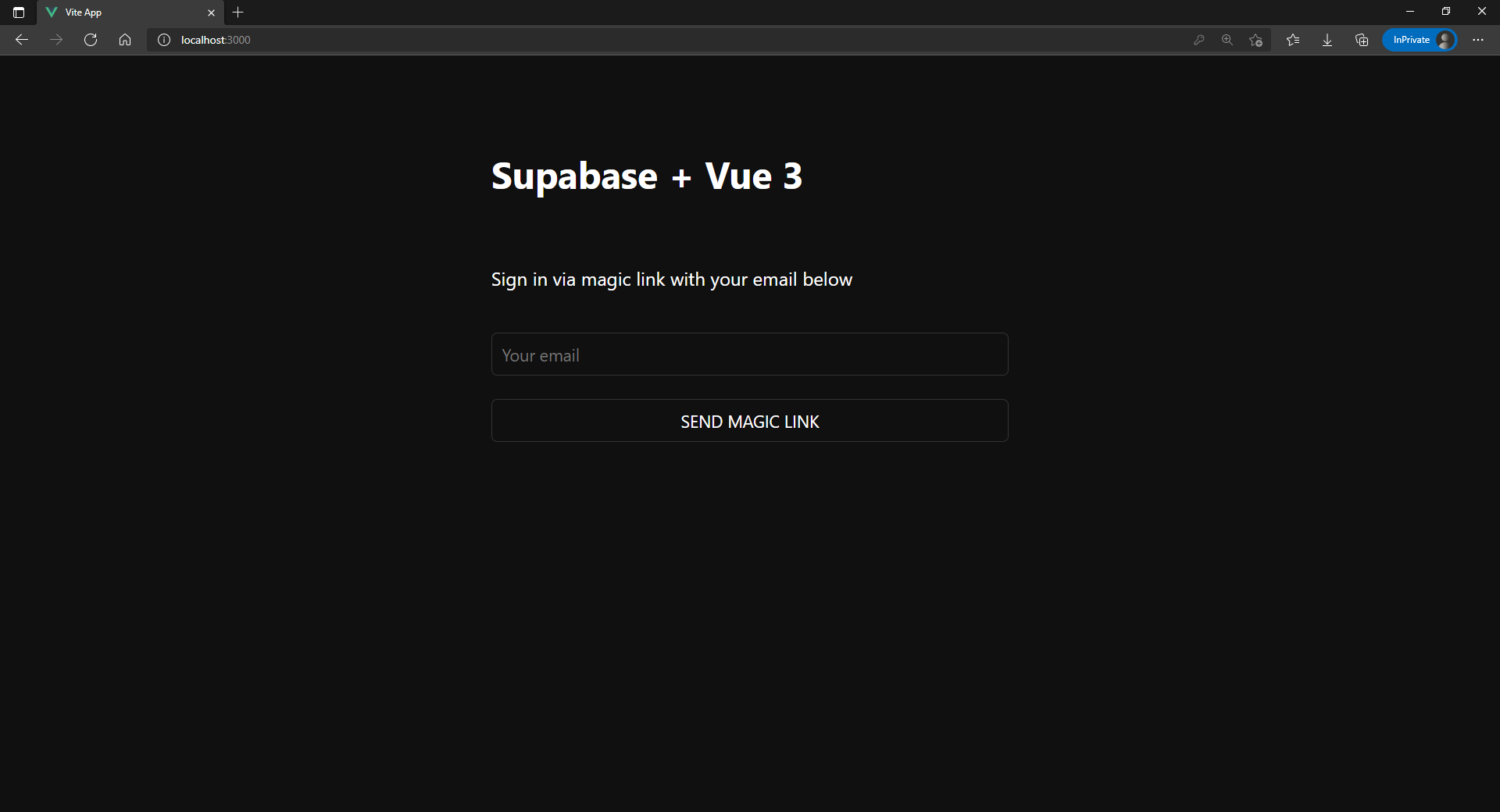
At this stage you have a fully functional application!